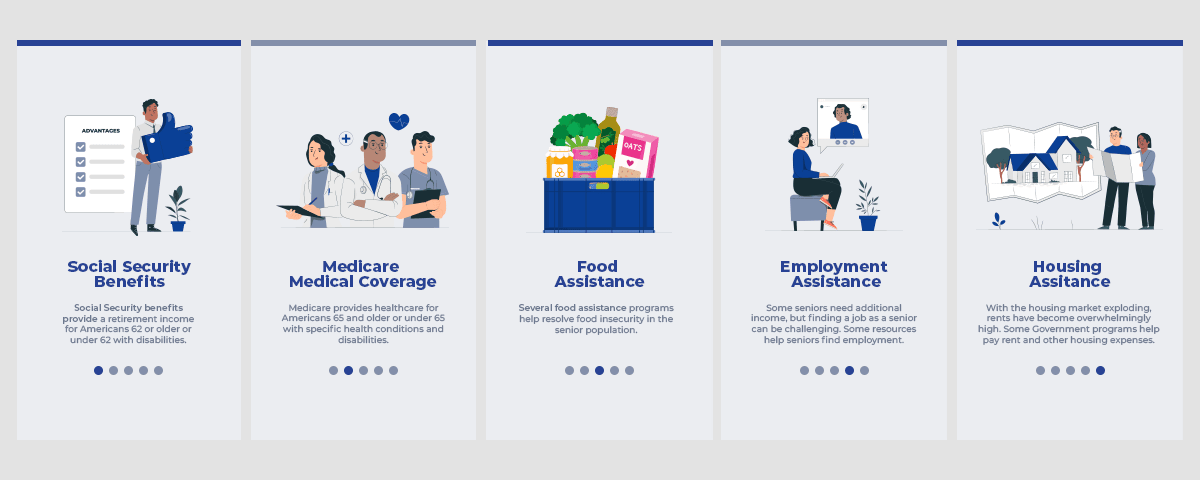
The foundation of financial security for American seniors rests on three pillars of government support: Social Security, Medicare, and Medicaid. These programs, developed over decades of legislative evolution, form the cornerstone of retirement planning and healthcare coverage for millions of older adults. Understanding how these programs work, their eligibility requirements, and strategies for maximizing benefits is essential for anyone approaching retirement or currently navigating their senior years.
These three programs represent more than just government assistance—they embody society's commitment to ensuring that older Americans can retire with dignity and access to essential healthcare services. Each program serves a distinct purpose while working together to create a comprehensive safety net that has lifted millions of seniors out of poverty and provided access to life-saving medical care.
Social Security: The Foundation of Retirement Income
Social Security stands as the most significant source of income for the majority of American retirees, providing monthly payments that continue for life. Established in 1935 during the Great Depression, the program has evolved into a sophisticated system that provides retirement, disability, and survivor benefits to eligible workers and their families.
The program operates on a pay-as-you-go system, where current workers contribute through payroll taxes to fund benefits for current retirees. Workers earn credits toward Social Security benefits by paying into the system through payroll deductions. Most people need 40 credits, equivalent to 10 years of work, to qualify for retirement benefits, though some family members may be eligible for benefits based on a worker's record even with fewer credits.
Understanding Your Social Security Benefits
Your Social Security benefit amount is calculated based on your highest 35 years of earnings, adjusted for inflation. The Social Security Administration uses a complex formula that applies different percentages to different portions of your average indexed monthly earnings, with higher replacement rates for lower-income workers. This progressive benefit formula ensures that Social Security provides a higher percentage of pre-retirement income for workers with lower lifetime earnings.
The age at which you claim Social Security benefits significantly impacts your monthly payment amount. While you can begin receiving reduced benefits as early as age 62, your full retirement age (FRA) depends on your birth year. For those born in 1960 or later, the full retirement age is 67. Claiming benefits before your FRA results in a permanent reduction, while delaying benefits beyond your FRA can increase your monthly payments by up to 8% per year until age 70.
For example, if your full retirement age is 67 and your full benefit amount would be $2,000 per month, claiming at age 62 would reduce your benefit to approximately $1,400 per month. Conversely, waiting until age 70 would increase your benefit to about $2,480 per month. These differences compound over time, making the timing of your Social Security claim one of the most important financial decisions you'll make in retirement.
Maximizing Social Security Benefits
Several strategies can help maximize your Social Security benefits. First, working for at least 35 years ensures that your benefit calculation doesn't include any zero-earning years, which would lower your average. If you've worked more than 35 years, continuing to work at higher wages can replace lower-earning years in your calculation, potentially increasing your benefit amount.
Married couples have additional strategies available through spousal and survivor benefits. A spouse can receive up to 50% of the higher-earning spouse's full retirement age benefit, even if they never worked or had low earnings. Survivor benefits allow a surviving spouse to receive up to 100% of the deceased spouse's benefit amount. Coordinating when each spouse claims benefits can significantly impact the total lifetime benefits a couple receives.
The "file and suspend" strategy was eliminated in 2016, but married couples can still use the "restricted application" strategy if one spouse was born before January 2, 1954. This allows the older spouse to claim spousal benefits while allowing their own benefit to grow through delayed retirement credits until age 70.
Medicare: Essential Healthcare Coverage for Seniors
Medicare provides health insurance coverage for Americans aged 65 and older, as well as younger people with certain disabilities. The program consists of several parts, each covering different aspects of healthcare services. Understanding these components is crucial for making informed decisions about your healthcare coverage in retirement.
Medicare Part A: Hospital Insurance
Medicare Part A covers inpatient hospital care, skilled nursing facility care, hospice care, and some home health services. Most people don't pay a premium for Part A because they or their spouse paid Medicare taxes while working. However, Part A does have deductibles and coinsurance that beneficiaries must pay.
For 2025, the Part A deductible is $1,676 per benefit period for hospital stays. A benefit period begins when you're admitted to a hospital and ends when you haven't received inpatient hospital care or skilled nursing care for 60 consecutive days. If you're readmitted after a benefit period ends, a new deductible applies.
Part A also covers up to 100 days of skilled nursing facility care per benefit period, but only after a qualifying hospital stay of at least three days. The first 20 days are covered in full, while days 21-100 require a daily coinsurance payment of $419 in 2025.
Medicare Part B: Medical Insurance
Medicare Part B covers doctor visits, outpatient care, medical supplies, and preventive services. Unlike Part A, Part B requires a monthly premium, which for 2025 is $185 for most beneficiaries. However, higher-income beneficiaries pay more through Income Related Monthly Adjustment Amounts (IRMAA).
Part B has an annual deductible of $240 in 2025, after which Medicare typically pays 80% of approved charges while beneficiaries pay the remaining 20%. This coinsurance can add up quickly for expensive treatments or frequent medical visits, which is why many people purchase supplemental insurance.
Enrollment in Part B is automatic for people already receiving Social Security benefits when they turn 65. Others must actively enroll during their Initial Enrollment Period, which begins three months before their 65th birthday and ends three months after. Late enrollment can result in permanent premium penalties, making timely enrollment crucial.
Medicare Part C: Medicare Advantage
Medicare Advantage plans, also known as Part C, are private insurance plans that provide Medicare benefits. These plans must cover everything that Original Medicare (Parts A and B) covers, but they often include additional benefits such as prescription drug coverage, dental, vision, and hearing aids.
Medicare Advantage plans typically have lower monthly premiums than Original Medicare plus a supplement plan, but they usually have networks of providers and may require referrals for specialist care. The out-of-pocket costs can vary significantly between plans, making careful comparison essential.
Medicare Part D: Prescription Drug Coverage
Medicare Part D provides prescription drug coverage through private insurance plans. While Part D enrollment is voluntary, there's a late enrollment penalty for those who don't sign up when first eligible and don't have other creditable prescription drug coverage.
Part D plans have varying formularies (lists of covered drugs), premiums, deductibles, and cost-sharing structures. The coverage gap, often called the "donut hole," occurs when total drug costs reach a certain threshold, though recent legislation has significantly reduced the impact of this gap on beneficiaries.
Medicaid: Healthcare Coverage for Low-Income Seniors
Medicaid provides healthcare coverage for low-income individuals and families, including many seniors. While Medicare covers many healthcare costs for seniors, it doesn't cover everything, and many seniors struggle with Medicare premiums, deductibles, and coinsurance. Medicaid can help fill these gaps for eligible individuals.
Dual Eligibility: Medicare and Medicaid
Seniors who qualify for both Medicare and Medicaid are known as "dual eligibles." Medicaid can help pay Medicare premiums, deductibles, and coinsurance for these individuals. There are several categories of dual eligibility, each with different income and asset limits.
Qualified Medicare Beneficiaries (QMBs) have Medicaid pay their Medicare Part A and Part B premiums, deductibles, and coinsurance. Specified Low-Income Medicare Beneficiaries (SLMBs) have their Medicare Part B premiums paid by Medicaid. Qualifying Individuals (QIs) also receive help with Part B premiums but have slightly higher income limits.
Medicaid Long-Term Care Coverage
One of Medicaid's most important benefits for seniors is coverage of long-term care services, including nursing home care and home and community-based services. Medicare provides very limited long-term care coverage, making Medicaid crucial for seniors who need extended care services.
Medicaid long-term care eligibility involves strict income and asset limits, and the application process includes a five-year "look-back" period to prevent asset transfers made solely to qualify for benefits. However, certain assets are exempt, including the primary residence (up to certain equity limits), one vehicle, personal belongings, and burial funds up to specified amounts.
Coordination and Planning Strategies
Maximizing benefits from these three programs requires understanding how they work together and planning accordingly. For example, Social Security benefits can affect Medicare Part B and Part D premiums through IRMAA, while Medicaid eligibility can help reduce Medicare costs for qualifying individuals.
Tax planning is also crucial, as Social Security benefits may be taxable depending on your total income. Up to 85% of Social Security benefits can be subject to federal income tax for higher-income beneficiaries. Understanding these tax implications can help in planning retirement withdrawals and managing overall tax liability.
The Importance of Professional Guidance
Given the complexity of these programs and the significant financial implications of various decisions, many seniors benefit from professional guidance. Social Security Administration offices provide free counseling, and State Health Insurance Assistance Programs (SHIP) offer free Medicare counseling. Financial advisors, elder law attorneys, and certified aging life care managers can also provide valuable assistance in navigating these programs.
Future Considerations and Changes
All three programs face long-term financial challenges due to demographic changes, including the aging of the baby boom generation and increasing life expectancy. Social Security trustees project that the trust fund will be depleted by 2034 without legislative action, which would result in automatic benefit cuts. Medicare faces similar challenges, with the Part A trust fund projected to be depleted by 2031.
These projections underscore the importance of staying informed about potential changes to these programs and planning accordingly. While major benefit cuts are politically difficult, modifications to eligibility ages, benefit formulas, or tax structures are possible.
Taking Action
Understanding Social Security, Medicare, and Medicaid is essential for financial security in retirement. Start by creating accounts on the Social Security Administration and Medicare.gov websites to access your benefit estimates and coverage information. Review your Social Security statement annually to ensure your earnings record is accurate, and begin researching Medicare options well before your 65th birthday.
Consider your overall retirement income strategy, including how Social Security benefits fit with other income sources such as pensions, 401(k) plans, and personal savings. The decisions you make about when to claim Social Security and which Medicare options to choose will have lasting impacts on your financial security and healthcare access throughout retirement.
"These three programs represent more than just government assistance—they embody society's commitment to ensuring that older Americans can retire with dignity and access to essential healthcare services."
The complexity of these programs can seem overwhelming, but the effort invested in understanding them pays dividends in improved financial security and peace of mind. Take advantage of the free resources available through government agencies and nonprofit organizations, and don't hesitate to seek professional help when making important decisions about your benefits.
Remember that these programs are designed to provide a foundation for retirement security, not necessarily to replace all pre-retirement income or cover all healthcare costs. Supplementing these benefits with personal savings, employer-sponsored retirement plans, and private insurance remains important for comprehensive retirement planning.